English Articles लेबल असलेली पोस्ट दाखवित आहे. सर्व पोस्ट्‍स दर्शवा

रविवार, ६ ऑगस्ट, २०२३

Erwadi Incident: A Catalyst for Mental Health Reform and Human Rights Advocacy


Erwadi Incident: A Catalyst for Mental Health Reform and Human Rights Advocacy

Introduction:

The Erwadi incident of 2001 stands as a tragic chapter in the history of mental health care, shedding light on the dire need for reform and the eradication of inhumane practices. This article delves into the harrowing events that unfolded in Erwadi, Tamil Nadu, and explores the lasting impact it had on mental health advocacy, Supreme Court judgments, and the promotion of human rights.


The Erwadi Tragedy:

In the summer of 2001, Erwadi, a small town in Tamil Nadu, witnessed a devastating incident that shook the nation. A fire erupted at a mental health institution located near the Erwadi Dargah, claiming the lives of 26 individuals who were seeking solace and care for their mental health challenges. The victims, already battling with their own inner turmoil, found themselves trapped within a system that failed to provide the support and compassion they desperately needed.


The Use of Cages and Restrictive Environments:

The Erwadi incident brought to light the archaic and inhumane practice of confining individuals in cages within mental health institutions. The victims were subjected to the confines of these restrictive environments, where their basic human rights were violated, exacerbating their distress and further compromising their mental well-being. This tragedy sparked a critical examination of the conditions and treatment of individuals with mental health conditions within such institutions.


Implications for Mental Health Reform:

The Erwadi incident served as a wake-up call, prompting a pressing need for comprehensive mental health reform in India. It drew attention to the lack of resources, inadequate training of staff, and the urgent requirement for a compassionate and inclusive approach to mental health care. The incident emphasized the necessity of establishing community-based support systems, investing in mental health infrastructure, and ensuring accessible and holistic treatment options.


Supreme Court Judgments and Human Rights Advocacy:

Following the Erwadi incident, the Supreme Court of India played a pivotal role in addressing mental health challenges and upholding the rights of individuals. Landmark judgments, such as "Parmanand Katara v. Union of India," recognized the duty of the State to provide immediate medical assistance, including mental health support. These judgments emphasized the destigmatization of mental health conditions, the importance of access to proper care, and the need for a human rights approach in mental health advocacy.

Addressing the Erwadi Tragedy:

The Erwadi incident should serve as a turning point in mental health discourse, encouraging the adoption of comprehensive reforms. Building upon Supreme Court judgments and the human rights approach, it is crucial to improve mental health services and prioritize community-based care. This includes strengthening mental health infrastructure, ensuring trained professionals are available, and promoting non-coercive, person-centered treatment methods. By empowering individuals and respecting their agency, we can foster an environment conducive to recovery and holistic well-being.


Raising Awareness and Ending Stigma:

The Erwadi incident emphasizes the need to combat the stigma surrounding mental health conditions. Education, awareness campaigns, and inclusive community dialogues are essential in challenging stereotypes and promoting understanding. Encouraging open conversations, providing platforms for sharing personal experiences, and highlighting success stories of individuals living with mental health challenges can help dispel misconceptions and foster a more supportive society.


Conclusion:

The Erwadi incident serves as a stark reminder of the urgent need for mental health reform and the abandonment of inhumane practices. It galvanized the nation to question the treatment of individuals with mental health conditions and sparked important discussions on improving mental health care systems.

Moving forward, it is imperative to prioritize mental health support and raise awareness within society. This involves investing in mental health infrastructure, training healthcare professionals, and establishing community-based support systems that provide accessible and compassionate care. It also calls for robust education and awareness campaigns to challenge the stigma surrounding mental health conditions and foster a supportive environment.

By drawing from Supreme Court judgments and advocating for a human rights approach, we can work towards a society that respects and protects the rights of all individuals, ensuring access to comprehensive mental health care. Let us strive to create a future where mental health support is readily available, where individuals are empowered to seek help without fear of judgment, and where compassion and understanding prevail. Together, we can build a society that values mental well-being, promotes inclusivity, and provides a supportive environment for all.


About Me :

Anjali Pravin, a dedicated writer and passionate activist, hails from Maharashtra, India. With 8 years of invaluable experience in mental health and the criminal justice system, she fearlessly wields her pen to shed light on pressing societal issues, advocating for change and inspiring compassion through her profound narratives.

email id : amkar.anju@gmail.com


रविवार, १६ जुलै, २०२३

The Disadvantages of Social Media Trials: Unveiling the Dark Side of Online Justice


Introduction :

Social media has evolved into a powerful forum for the dissemination of information, the initiation of social movements, and the expression of opinions in the digital age. Positive developments have surely resulted from it, but one worrying tendency is the emergence of "social media trials." These trials take place when the public determines guilt or innocence without following due process, frequently spurred by viral posts. We shall examine the drawbacks of social media experiments in this essay, emphasising the potential harm they may pose to both people and society at large.


1. Lack of Due Process:

The lack of due process is one of the biggest problems with social media trials. In conventional judicial systems, the burden of proof rests with the prosecution and defendants are deemed innocent until and unless proven guilty. On social media, however, charges can quickly spread without adequate research or proof, resulting in quick judgements of people without a fair trial. The principles of justice are threatened by this absence of due process, which can have serious repercussions for the accused.

Case Reference: 

The case of Sarah falsely accused of theft on social media led to her reputation being tarnished, causing significant emotional distress. Despite being proven innocent later, the damage had already been done, highlighting the irreversible consequences of social media trials.


2. Trial by Public Opinion:

Frequently, public opinion serves as the judge, jury, and executioner in social media cases. When hashtags and posts go viral, they can spark a frenzy of criticism or support for a certain person, frequently based on incomplete or biassed information. This kind of group decision-making can be extremely arbitrary and manipulable, resulting in unfair conclusions and harming the reputations and lives of those involved.

Case Reference: 

The case of James, a high-profile public figure, faced a social media trial following an accusation of sexual misconduct. Despite a lack of substantial evidence, the online community quickly condemned him, resulting in severe professional and personal repercussions. Subsequent investigations later cleared James of any wrongdoing, illustrating the dangers of hasty judgments in social media trials.


3. Amplification of False Accusations:

Social media has unquestionably been essential in increasing public awareness of significant social concerns, but it can also serve to legitimise false allegations. Without a thorough fact-checking procedure, unfounded accusations can spread swiftly and cause harm to the accused's reputation as well as physical injury. Even if the truth eventually comes out, the harm caused by internet shaming may be beyond repair.

Case Reference: 

The case of Emma, who was falsely accused of animal abuse on social media, experienced relentless online harassment and threats. Despite her innocence being proven by a thorough investigation, the damage to her personal and professional life was extensive, emphasizing the lasting impact of false accusations during social media trials.


4. Impacts on Mental Health:

Social media trials can have serious negative effects on a person's mental health because to the high scrutiny and public shame involved. Cyberbullying, harassment, and psychological suffering are frequent experiences of the accused, which can result in anxiety, sadness, and even suicidal thoughts. These negative impacts may be made worse by the power disparity on social media between the individual and the group.

Case Reference: The case of Michael, who was wrongly identified as a perpetrator in a criminal incident through a social media trial, experienced relentless online harassment and received death threats. The constant fear and mental anguish he endured resulted in severe anxiety and emotional trauma, underscoring the detrimental effects on mental health caused by social media trials.


5. Erosion of Trust in the Legal System:

The popularity of social media trials threatens public confidence in the legal system as a whole. Faith in the justice system declines when the general public's perception of guilt or innocence takes precedence. The legitimacy and efficiency of the judicial system as a whole may suffer as a result of this erosion of trust.

Real Case Reference: The highly publicized social media trial of a celebrity involved in a high-profile criminal case led to widespread skepticism regarding the fairness and integrity of the legal system. The rapid spread of misinformation and biased narratives eroded public trust, emphasizing the detrimental impact of social media trials on the perception of justice.


Conclusion:

While there is no doubt that social media has improved society, it is important to acknowledge and solve the drawbacks connected to the phenomena of social media trials. This digital trend has alarming side effects, including lack of due process, public opinion trials, the amplification of false allegations, effects on mental health, and a decline in trust in the legal system. To counteract these negative effects and establish a more equitable and balanced online environment, we must encourage critical thinking, fairness, and the preservation of basic concepts of justice as responsible social media users.


Writer info:


anjali-pravin-apali-writergiri

Anjali Pravin, a dedicated writer and passionate activist, hails from Maharashtra, India. With 8 years of invaluable experience in mental health and the criminal justice system, she fearlessly wields her pen to shed light on pressing societal issues, advocating for change and inspiring compassion through her profound narratives.

email id : amkar.anju@gmail.com


बुधवार, २६ जानेवारी, २०२२

Learning Poverty and Closed Schools – impending educational Crises

 Learning Poverty and Closed Schools – impending educational Crises


Covid 19 has affected many sectors badly. School education is one of the worst affected areas during this pandemic. The dropout rate would be at its peak. Vaishnavi, (name changed) a five grader kid from Pune s Government school, had to leave and shift to the native village. Her father could not bear the expenses of two children. He lost his job. Shivraj,(name changed) one more student from Pune could not attend a single online class. His father does not afford the android phone. Nadeem, a 6th grader, has lost foundational literacy and numeracy. There are many more such examples that warn us about impending educational crises. Our education status was not good before covid, and now it is at stake due to pandemic hit.

India's education system is always characterised by persistent access issues, learning gaps, infrastructure, and rotten syllabus. Pandemic made it even worst ever. One of the studies shows concern that 64% of kids in rural India fear they have to drop out if not given additional support.  (https://theprint.in/india/64-kids-in-rural-india-fear-they-have-to-drop-out-if-not-given-additional-support-survey/625146/) .

Right now, India is in the most challenging condition in the education sector. It is an alarming call of the threat of upcoming education crises. Today’s uncertainty and unclarity will have long term consequences.

Schools Education is facing four major issues.

1.    Access to Virtual Education

As many as 43% of parents in rural areas said no online material was sent by the school, while 36% said their children did not have their smartphones. ASER study marked that 67.6% of students’ families have one android phone. Students are not regular in the online class. It’s tough for a teacher to ensure 100% engagement in class. Pandemic has created a clear digital divide. This divide can be eliminated once school starts. (http://img.asercentre.org/galleries/aser2021_final.pdf)  

2.    Huge Learning Gap

One of the studies of Azim Premji University revealed shocking data about learning loss. During Covid, "90% of students have lost at least one language ability, and 80% of students have lost at least one mathematical ability".  SCERT has come up with Bridge Course but has no remarkable result.

If schools continue to be closed, it will be colossal Learning Poverty in India. Recently, the World Bank’s Education Director said that “Learning Poverty in India is expected to be increased from 55% to 70”. In the Indian context, if schools are continued to be closed, it would be incalculable learning loss.

3.    Negative impact on Mental Health of Students

Students during a pandemic are undergoing unusual social and emotional conditions. In cities, students are locked down against their instinct. An increase in screen time, lack of physical activity, lack of socialisation and addiction to social media have a terrible impact on their physical and mental health.

4.    Engaging teachers in non-Teaching job

In one of the Government schools in Pune, there is one permanent teacher for 120 kids how a teacher would handle 120 students in virtual space. How would he balance his other non-teaching work with teaching in a pandemic hit? Teachers are being engaged in Covid duties. Already school education is undergoing worst state ever and important stakeholder, a teacher, entangled in covid assignments. Can’t government hire other people for covid duties?


Recommendations to cope-up with the existing and upcoming education crises

Reopen Schools of schools with 50% capacity or adopt a hybrid model

Fear of Covid-19 spread cannot justify keeping schools closed for a long time. For almost two years, schools have been shut down, through online space, it’s impossible to fill this gap. It’s advisable to adopt a hybrid model. Schools can be reopened with 50% of their capacity. Those parents are unwilling to send their children to school; schools can broadcast physical classrooms through online apps for such students. Schools can reopen in villages with their 100% capacity if such villages are not in the red or yellow zone.  World banks Education director Mr Sarveda has clearly said that “there is no relation between opening schools and the spread of coronavirus. There is no evidence….”

Integrated SEL (social-emotional learning) to keep students happy

Students become lonelier and thrown out of the process of socialisation for two years. School is the primary factor in the process of socialisation. In covid students are facing mental problems. By integrating SEL in day-to-day teaching or 1 hour weekly for SEL space. Delhi Government’s happiness curriculum is the best example.

Level wise Buckets of Students

This year, the Maharashtra government has launched a Bridge Course of 45 days for encountering learning gaps. It’s tough to fill the gaps of two years in 45 days. During covid, schools are closed for two years, and most students have lost their fundamental literacy and numeracy (FLN). Expecting students to perform in their respective grades is meaningless and does not produce a positive result. It is advisable to bucket the students as per their level.

Schools with the help of local administration can start community schools. These schools can be in any community hall, temple or any open space where 5-10 students can quickly gather by keeping social distance. Volunteers from villages can be responsible for teaching Foundational Literacy and Numeracy. In their learning camp project, Pratham (NGO) had done an excellent job through volunteers and local staff.

In our school, we are focusing on differentiated learning. We have three buckets of students in the same grade, namely High-Middle-low rigour kids. We are experiencing improvement in engagement FLN levels. We are doing this by using community hall. Where kids are regularly coming. With the help of teachers and volunteers, we are focusing on differentiated learning.


Collaboration with Private players or NGOs to restore and improve literacy

Literacy and Numeracy have been ruined during the last two years. The Bridge course did not reach every pocket of students. The PPP model can be fruitful to restore and improving literacy levels.  The Education Department can collaborate with established NGOs to develop a road map to counter learning gaps.

Teach for India (NGO) has developed a bridge curriculum and implemented it in a different school with the help of their fellows and volunteers.  Leadership for Equity (NGO) already work with SECRET in a few districts of Maharashtra to address the issues of learning gaps. Similarly, the government can do this at a mass level.

Teachers should involve in school work only.

I spoke with a few teachers of PMC schools. They shared that they were busy with Covid duties like survey, contact tracing, vaccination drive, etc. How can teachers perform their role of teaching for which they are meant?  The administration can hire non-teaching folk to carry out covid duties.


No one knows when this pandemic will end, but schools should not be shut down. Schools have to reopen, and that too permanently to reopen to save India from impending educational crisis. 

मंगळवार, १८ जानेवारी, २०२२

Last Year : Highlights

The new year should welcome by having self-reflection on what to keep from last year? What to drop from last year? And what to create new in the new year? This is the way I made my resolution last year. The year 20-- was the year of `consistency and perspective building. Last year I did lots of new things. I want to share these things with all of you because I believe in the value of "sharing". I am sharing major highlights of the year 20--. I believe that it will definitely help readers. 

Major Highlights of the year 20--

1. Mental Well Being.

A. Meditation - 

I am vipassi; I have done 10 days course of Vipassana. In 2020, I decided to do 15-20 minutes of meditation daily. I followed it religiously. It helped me to kick start my day with positive vibes.  Now I am doing meditation of 20 minutes (Morning+Evening) daily. Spiritual life will always be complimentary to your professional and personal life. 

B. Sleeping hours

I have improved my sleeping cycles by changing my lifestyle. I regularised my mealtime. In 2021, I had a rigorous timetable of meals and sleep. I used to go to bed at 10.00 pm and get up at 5.30 pm. 

C. Reading

No one can deny the importance of reading. Few books have built perspective and got food for thoughts. The book 'Sapiens' by Yuval Noah Harari made me realize the human-ness and opened the doors to seeing anthropology's new aspects. I read "Think like a monk" by Jay Shetty, exploring Monk's connection with ordinary people. This book insists you think on Minimalism way of life. One more book that made this year meaningful is  Atomic Habits by James Clear. It helped me to regularize a few good habits. Achyut Godbole's "Manat" (Marathi book) has opened the door to the world of Psychology.  Apart from these books, I also read articles and the journal of Child Psychology. 

Self Reflection 

A new habit developed last year. I inculcated a practice of journaling important events of life. Most of the time, it involves lots of self-reflection. It led me to do my own SWOT analysis... It helped me a lot in my professional as well as personal life.

2. physical well being

Exercise

Health is wealth...  This is not just a famous quote but a way of life. I have followed a strict timetable for doing physical exercise. I was doing 5 hours of exercise in a week. I have reduced my weight from 80 kg to 73 kg. 

Food habits

I used to eat anything. I had no control over overeating. It caused me severe acidity as well as breathing issues. In 2021, I intentionally changed my food habit. I remember there hardly 4-5 times I ate outside food Since September 2021. Regularized food timings helped me to have balance food. I am using mud pots for cooking food.

Panchakarma Therapy

I am using maximum chemical-free content in my body. Through Panchkarma, I detox my body completely and also adopt healthy food habits. 

_____________________________________________________

3. Financial Well being

"Saving is the first expenditure". I learnt this mantra while working with self-help groups. In year 20-- could save 25% of my total income. I have diversified my hard-earned money into different pockets of investment. How much do you spend? And On what do you spend? are very important. I have adopted the minimalist approach to life. I spent only on necessities and the rest of the money I would save. 

रविवार, ११ ऑक्टोबर, २०२०

Do we need a school for parents?

People, institute, and overall society contribute to the process of child development. Child development is not an isolated process. The child is being developed with help of his surrounding environment, thoughts receive from different people, the social-economic status of the family as well as the entire society, and so on.  In the same process parents and schools are the most important factors in children’s lives because they spent most of the time with them. School education is the foundation for all children to lead the life meaningfully. There is no doubt about the importance of schooling for children. In the case of school education, it is said that there are not bad students but there are bad teachers. But in the case of home education, there are not bad children but there are bad parents. Confused?

PC: United Nation website


Ownership vs Trusteeship

Last week I got a call from one of the parents of my students. She is the mother of that child. She told me “Sir, my daughter is not at all studying, I scold her, beat her but she is not at all understanding me. She is always busy with her drawing books. Sir, tell me what shall I do?”. Same things one can find with other parents too. If any child is not performing well in the school what would be the possible reaction of parents in general.  They will scold their child or they will blame the school teacher or they will change the school or they will change the tuition or they will abuse or beat the child.  Why does it happen? Why is that the story of most of the home?  A.S. Neil, the founder of Summerhill School, used to say that “….as we train our dogs to suit our own purposes, so we train our children…….There is never a problem child. There are only problem parents.”

I am speaking with 4-5 parents, daily. They have a concern about their child’s future. Because of that concern, they become owners of the child unknowingly. This attitude can come out pf a societal understanding of child development. Parents always have expectations from their children. It is not a wrong thing to have expectations from the children. But it is wrong when parents are forgetting their own childhood and they expect something which they could not do in their childhood. Parents should be in the role of trustee of their children.

The prestige of parents vs freedom of the child

Child should be free from birth but as A S Neil said unfreedom start from birth itself, even, he said, it started before birth. If a repressed woman with a rigid body bears a child, who can say what effect the maternity rigidity has on the new born baby. (p. 83, Summerhills).

Parents are taking care of their prestige rather than the freedom of choice of children. The family with weaker economic backgrounds enrolled students in the English medium. Students' home language and school language is different. How would students get an education?

A friend’s child gets 90% why not my child… that another prestigious dilemma of parents.  One of the parents called me and started complaining about the child,…. “my child is always playing and he is too much lazy, he is not at all opening books” It is not laziness, but it is a lack of interest that parents could not understand. In the name of prestige, parents are denying freedom to children. They want that their child should be an engineer or doctor irrespective of choice. They want their child should be trained to survive in the rat race irrespective of freedom of life. want to give a standard life to children at the cost of quality life.

School is not only important for the child but it also important for the parents. There is a need for schools for parents where all parents should be shaped to free the child not to arrest them in the shackles of prestige, concern about the future, rat race, and so on. 

रविवार, १३ सप्टेंबर, २०२०

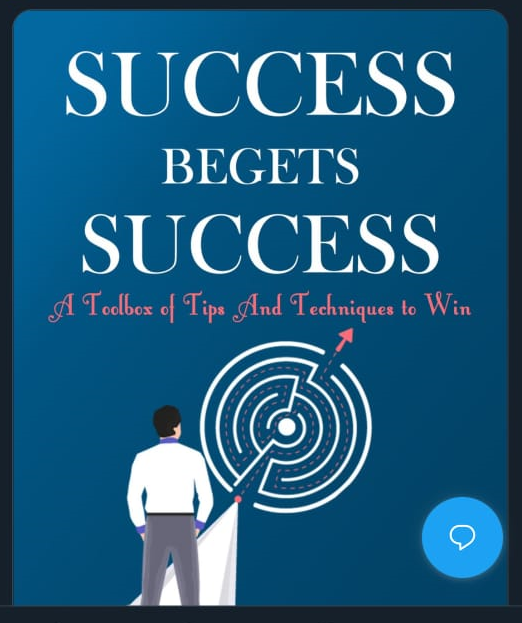
Success Begets Success - A Review


Source : Twitter


There is a common thing among the great successful people. It is their habit of reading books. A Book will give you different perception to see the world. Books will shape the attitude and overall personality of readers. Most of the time content of the book has played an essential role in it. Success begets success by Mr Satyanand S. is one of these books which will give the reader a positive mindset without rejecting negative facts of life.  This book is Self-Help or Self-Growth book but has very different and practical contents than so-called Self-Help books. There is no unnecessary claims or over-optimistic thoughts in the book. The author has a practical view on Success as well as Failure. When the author says “Don’t plan anything more than a day. But when you plan, plan it meticulously.” I understood the meaning of success begets success. Pragmatic Success Attitude (PSA) is the USP of this book. It does not force readers to be optimistic but it encourages readers to be as short term pessimistic and a long term optimistic.  The most important thing is that the language of this book. Any beginner can read it.

Book has 3 section, these are

A. Desire

B. Direction

C. Discipline. 

Section A of desire focuses on personal traits like attitude, character, mindsets and self-esteem. This section helps the reader to develop an attitude to be optimistic without neglecting negative facts. Section B of Direction is more about planning and management. It focuses on the Goal settings, Time management and set up a success-oriented routine. Section C of Discipline is about the management of the consequences. It tells that success is not the single day achievement but it’s an outcome of multiple failures provided perfect failure management.

I highly recommended reading this book to have a reality check of your attitude and shape it accordingly. Following is the link of the book. 

https://gumroad.com/l/SIDeX

रविवार, १६ ऑगस्ट, २०२०

Capernaum - A painful journey of 12 year Zain

Source: https://www.sbs.com.au

We have heard over and over again that no one is born a criminal. The Capernaum is the best example of how the situation makes a criminal. “Capernaum” is a Lebanese movie. It is a 2018 Lebanese drama film directed by Nadine Labaki. The film has bagged best Jury award in Cannes Film Festival 2018.

The plot of the movie centred to painful journey of 12 years boy, Zain. This film threw lights on the different issues of the children. The interesting fact is that the child actor in the lead role, the astonishingly talented Zain Al Rafeea, was a Syrian migrant working as a delivery boy in Beirut when he was spotted by Labaki. He is now settled in Norway and is already winning international awards too. It is a great film that deals with juvenile delinquency

The plot of the Movie

12 year Zain loved his 11-year-old sister Seher. When he found blood in her sister’s bottom part he cleaned her clothes and suggested her to not to tell mother. Zain knew that if his mother gets an idea of his sister's menstruation, she would marry her to the landlord. Zain has 5 siblings. It’s a typical lower-class family of Beirut. Zain did not go to school instead, he used to do delivery work in his landlord’s shop. One day he knew that her sister forcefully sent with father to marry with the landlord. He fought with his parents and run away from home. Then he met Rahil. Rahil was a Syrian illegal migrant lady living in Beirut with her illegitimate 1.5-year son. Zain started to stay with Rahil. Suddenly police booked Rahil as an illegal migrant. Zain left her son with one of the agents who assured him to send that small kid to a rich family. Zain wanted to go to another country and he knew that for that he needs identity documents. He returned home to get these documents but he found that his sister died due to premature pregnancy. In the fit of rage, 12-year kid stabbed the landlord.  

A 12-year boy, Zain serving imprisonment of 5 years in one of the remand home of Lebanon for stabbing a person who was responsible for the death of her sister. One day Zain called up the TV channels’ live show and demanded to sue his parents. His demand is accepted and litigation began. Judge asked the first question What do you want to sue your parents? Zain said “ Because I was born” 

A boy who blamed her parents for giving birth to him. He stabbed did that boy get justice in the court? Uneducated parents, who are ready to do 100 crimes for feeding their children, can justify the death of her daughter due to premature pregnancy? Why did zain feel that his birth was a criminal act of his parents? You will get the answer to these questions in the movie. This movie is available on Amazon Prime. 

The trailer of the movie: https://www.youtube.com/watch?v=ULUo0048xZE


Pravin Anjali

बुधवार, १० जून, २०२०

WHO MOVED MY CHEESE? : Summary

WHO MOVE MY CHEESE?: Summary

WHO MOVED MY CHEESE?

The ultimate truth of the world is CHANGE i.e. law of impermanence. Nothing is permanent in the world except CHANGE. Change is the only constant thing. Change can be positive or change can be negative. Change can be transformative, good or destructive. It is the ultimate truth of personal as well as professional life. How to face the challenges of change? Do we need to adapt with changes? Or do we need to rigid against the changes?

CHANGE is the ultimate truth of life


“Who move my cheese?” is the answer to CHANGE. It is a short, simple but one of the most influential books. Who Moved My Cheese? is an amusing and enlightening story of four characters who live in a maze and look for cheese to nourish them and make them happy. Cheese is a metaphor for what you want to have in life - whether it is a good job, a loving relationship, money or a possession, health, or spiritual peace of mind.

The four imaginary characters depicted in this story —the mice: "Sniff" and "Scurry;' and the Little people: "Hem" and "Haw" . Sometimes we may act like Sniff who sniffs out change early, or Scurry who scurries into action, or Hem Who denies and resists change as he fears it will lead to something worse, or Haw who learns to adapt in time when he sees changing can lead to something better!

WHY DO NOT PEOPLE ACCEPT CHANGES?

Ø  Fear of failure

Ø  Belief System

Ø  Pre-occupational about particular things

Ø  Lack of efficacy to keep update

Ø  Over-confident

Ø  Under-estimate of small change

Ø  Lack of monitoring changes


LEARNING FROM BOOKS

1.       Flexibility - There must be flexibility in handling professional as well as personal life. Rigidity will make you to lose personal relationships as well as it will be caused of loss in the business and disturbing working life.

2.       Adaptability - Change is permanent. Political, Social, and economic conditions are keeping on changing. Change cannot be stopped. Adaption is the quality that needs to develop to survive in the competitive world. Sniff and Scurry have adapted themselves with change and were finding a new section of cheese.

3.       Resilience Building - Changes in the different aspect of the world is producing potential threats that need to cope up with by improving and strengthening the resilience-building capacity. Climate change adaption is the best example of resilience building.

4.       Don’t give up- Haw’s efforts to find cheese tells us to develop attitude of “don’t give up”.

5.       Productivity is more important than activity. This is also one of the learning from the book.  Hem is only doing hard work with rigid mentality but it never produces any positive results.


Click this link to purchase book : https://www.amazon.in/Who-Moved-Cheese-Spencer-Johnson/dp/0091883768/ref=sr_1_1?dchild=1&keywords=who+moved+my+cheese&qid=1591765687&sr=8-1


शुक्रवार, २२ मे, २०२०

Manthan- Film that show the grassroots development process


Manthan- White Revolution Movement

I was searching for movies of Smita Patil and I got a movie named Manthan. I watched that movie. The first reaction after watching the movie was that the movie was successful to show grassroots level work of Development organization. For more than 5 years I have been working at the grassroots level, so I can relate this movie very well. This movie will be closed to the hearts of all who work at grassroots for promotions of federations, FPOs , and Co-operatives.
Mathan: Movie Review
The word Manthan Literally means “The Churning”.  Work at the grassroots level is not easy and it was even more difficult 30-40 years before. Manthan was the churning of facts, local politics, group dynamics, casteism, grassroots development, and attitude of the politician, development professionals, and community. This movie was based on the story of the White revolution pioneered by Dr. Verghese Kurien. It was the era in which the co-operative concept was new for Gujarat. There was a monopoly of a few powerful people in milk business.  This movie showed the struggle of development workers to organize the unorganized community under the umbrella of co-operative.  
The plot of the movie was in the small village of Kheda district of Gujarat. The film traces a small set of poor farmers of Kheda district in Gujarat who had the vision and foresight to act in a way that was good for the society and not for the self alone. In this movie, we can see so many social, political, and economic dimensions of villages. It showed the typical village's life and contemporary social stratification in the villages. The film was successful to give the feel of the village’s life. On one hand, same person form upper caste was Sarpanch in power since 20 years and Mishra (Amrish Puri), a moneylender, who ruled the village by giving loan with usurious interest rate and looting by taking milk from them at low prices. On the other hand oppressed community which had a fear of getting unite against the powerful people, Bhola (Nasaruddin Shah), a leader of Harijan was pushing his community up for organizing under co-operative, and women were as usual oppressed by a patriarchal society.  There were a group of development professionals headed by Dr. Rao (Girish Karnad) who became sandwich in between oppressed and oppressor.
Mathan: Organize the unorganized 

The film was beautifully written by renowned writer Vijay Tendulkar and directed by sensitive Mr. Shyam Benegal. The film has a strong star cast. Amarish Puri was in the role of diary owner, Smita Patil was looking pretty in the role of village women, Nasaruddin Shah poured life in the role of leader of Harijan, Dr Mohan Agashe had played role of one of development professional and Girish Karnad was outstanding in the role of Dr, Rao. It has been said that story of Dr. Rao was resembled to the story of Dr, Kurian. Songs in this movie was meaningful and getting the feel of the soil of Gujarat. Entire movie one can enjoy the local songs written by Niti Sagar.

This movie took the crowdfunding in India at a different level and showed the power of “collective might”. For this film 5 Lakh farmers, who were the members of Gujarat Co-operative Milk Marketing Federation Ltd. donated Rs. 2 each. Mathan is “The First Crowdfunded movie in India.”  The film won the National Film Award for Best Feature  Film in Hindi and National Film Award for Best Screenplay for Vijay Tendulkar.
There was a very charmingly meaningful song in this film that can one opt to listen again and again. The film begins and ends with this song.
मेरो गाम काठा पारे ... जहां दूध की नदियां बाहे
जहां कोयल टहूको गाये... म्हारे घर अंगना भूलो ना

YouTube Link : https://youtu.be/91qliAxU1pA


मंगळवार, ५ मे, २०२०

TUKARAM - Rebellion Saint - Part 2


THRONES OF PANDIT BEGAN TO TREMBLE

Indian Society was under tremendous influence of Vedas, Upanishads, and Puranas. Brahmin Varna had command over all religious scriptures. Apart from these scriptures, society was under the dark era of the inhuman provision of Manusmriti. Only Brahmin varna had rights over these scriptures. Shudras were denied rights over Vedas. Listening, Reading and Interpreting Vedas was the domain of Brahmin. If any person other than Brahmin did it, it was considered as a sin. Manusmriti had inhuman punishment to Shudras for Listening, Reading and Interpreting Vedas.  Saint Tukaram had raised whipcord against the system in this dark era. His lines of Abhangas wound the believers of the Varna system. He always made upper caste people unanswered by his poems. In this blog, I explore the Tukaram’s perception towards the prevailing system and rituals
Tukaram was not an ordinary poet. He was a poet who had a proper understanding of social issues and his poems were full of wisdom. He used to conduct kirtans (song use for social awakening) in which he used to raise questions on rituals and exploitative varana system. He used to challenge the knowledge of pundits, (Brahmin scholars).  Tukaram gave candid options to Vedas through his abhanga and kiratanas.

ATTACK ON “LITERAL SCHOLARS”
He did not deny the power of word but he oft-quoted that the power of word without wisdom has no use. He was always telling that word should come out from mouth with proper understanding. Without understanding the essence of the word was nothing more than a burden. He fired on Vedic Literal Pundit by comparing them with the bull. He said that the bull was carrying sugar but it never tasted sugar. Literal pundits were like that bull. They were just carrying the burden of words but they never tasted wisdom behind the words. (साकरेच्या गोण्या बैलाचिये पाठी| तपासी सेवती करबाडे||)

Tukaram’s abhngas were whipcord upon the established class. His every line of abhngas were striking against the scholars of words. There were few people who became scholars through by-hearting the shlokas from scriptures. He compared such by-hearted scholars with the horses. One was carrying luggage and the other one was carrying the burden of words. (अर्थेविना पाठांतर कासया करावे| व्यर्थची मरोनी घोकूनिया||  घोकूनिया काय वेगी अर्थ पाहे| अर्थरूप राहे होऊनिया||)

Don’t tell mythology : As he was attacking literal pundits, he also attacked mythology in Puranas. He used to say that "don't tell us mythology without any experience". These stories would give you pleasure to your ears but it would be useless in practical life. Tukaram told mythology was just honor of words and experience was important than words. His Abhangs were thrashing storyteller pundits.(येरांनी सांगावी रेमट कहाणी| चिता रंजवणी कराया|| तुका म्हणे येथे पाहिजे अनुभव| शब्दांचे गौरव कामा नये||)

There were people of that time who were reciting complicated mantras and shlokas from Vedas. Such people were telling bravery stories from mythology. Tukaram, mischievously told such pundits that bravery should be inside. It was not only for discussion or recital. (बोलो जाणे अंगी नाही शूरपण| काय ते वचन जाळावे ते||)

Tukaram’s practical and rational perception of life: Tukaram was practical enough. He was portrayed as an impractical and over-emotional saint by Brahminical Scholars. But his abhangas  are enough to prove his practicality and his rational perception of life. He was sensitized by the grief of people. He had knowledge of social issues, poverty , discrimination and inequality. He also very well aware that listening discourse of any pundit will not give food, it will get only through hard work.(तुका म्हणे काय कहाण्या अरे सांगाल गोष्टी| चाटावे तुमचे बोल रे भुका लागल्या पोटी)


FILTERED VEDAS
Veda is the most influential factor in Indian Culture. It influence on almost all aspects of Indian society. Impacts of Vedas are positive as well as negative on the followers of Hinduism. It considered as most important scripture of Hinduism.  The literal meaning of Veda is ‘to know’.
Vedas are being preserved by generations through reciting. But as time passes, recital got more importance than the essence of Vedas. Focus had a shift from wisdom to the recital. Vedpraman became shabdpraman
Shudras had no right to read, listen and intemperate Vedas. A large section of the Indian society was away from the Vedas.
The walls of this prison were shaken by the ancient Charvakas.  But the Vedic Pundit defamed him.  Gautama Buddha had rejected the Vedas.  But the Vedas ended their thinking by using various tricks.  Even Tukarams of sensitive minds stood fearlessly in the shadows to free themselves from this prison of the Vedas, and openly cried out, "I am not a slave to your Vedas.” Sant Tukaram realized this fact through his critical thought process. According to Veda, the soul of all is brahma but in reality, Veda becomes a tool of discrimination that was supposed to be a tool of equanimity.  Tukaram, being a shudra, had no rights over Vedas but he did not reject Vedas completely. He knew that intentionally Vedas were kept away from a large section of the society and convenient meaning is taken from Vedas by Vedic Pundit.  While addressing masses, Tukaram suggested that one should drink the essence of Vedas by filtering and keeping discrimination aside. (गाळूनिया भेद| प्रमाण तो ऐसा भेद|| and आहे तैसे बरी | खंडे निवडतो वेदांची||)He was the first saint who openly rebelled against the Varna System. He broke the rule of Manusmriti and comment on Vedas.
Tukaram called “dharmthak” (person who cheat in the name of religion) to those Vedic pundits who used to deceive people and taking the disadvantage of their ignorance. His criticism of the commercialization of Vedas like a thunderbolt to Vedic Pundit. He said that pundits were apparently showing that they had Brahmdnyana but inner side they were thirsty of Money. (मुखे बोले ब्रम्हज्ञान| मनी धनाभिमान||)
Tukaram’s strong rebel against Vedas is the proclamation of intellectual freedom in the social history of India.

कांदे पोहे कि सौदेबाजी....की विवाह संस्थेच फाऊंडेशन

 कांदे पोहे कि सौदेबाजी....की विवाह संस्थेच फाऊंडेशन   काही चांगल्या / कमावत्या मुलांची लग्न ठरत नाही मग ती मुलं किंवा त्याच्या घरचे मुलींना...